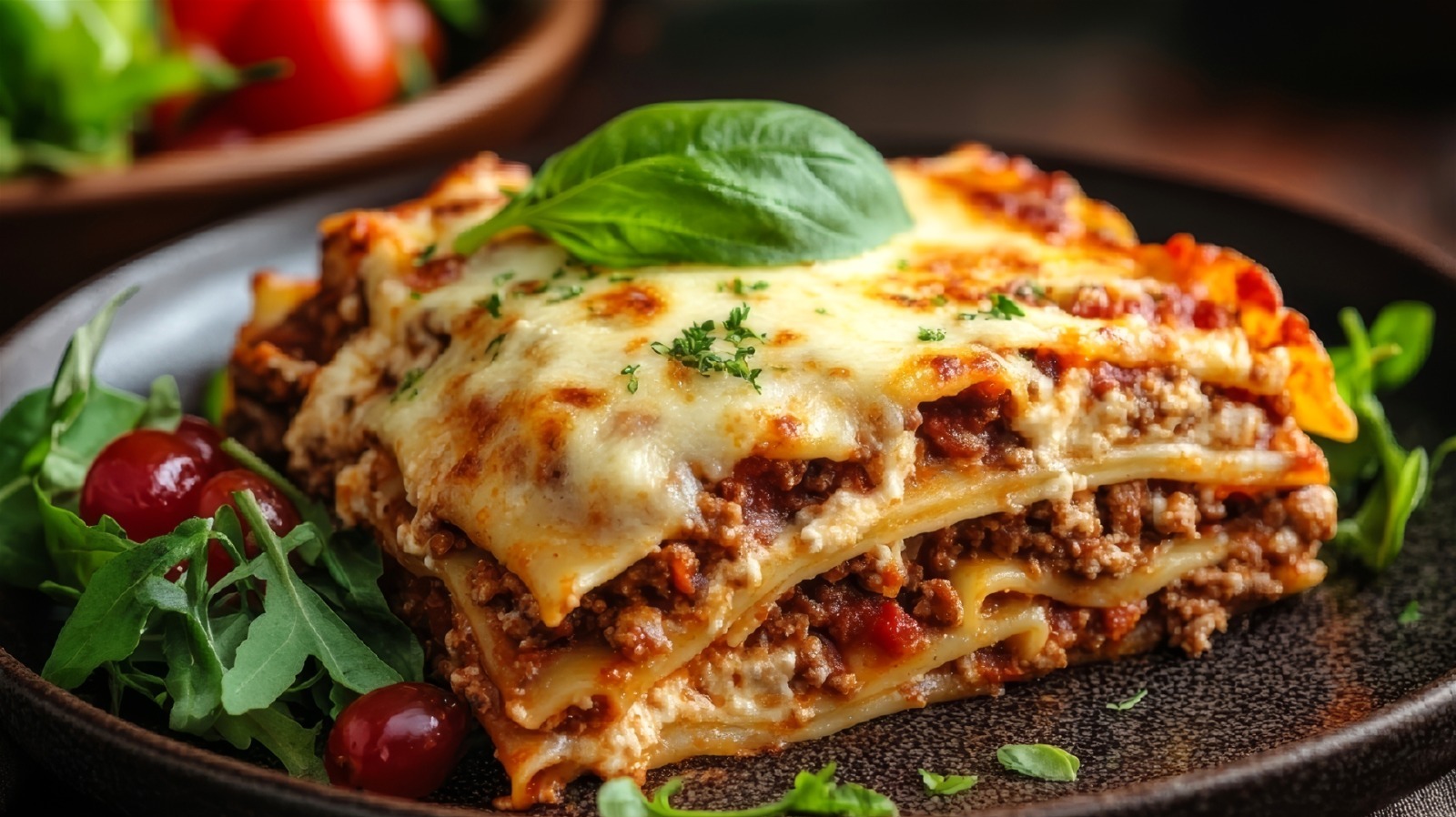
From Ancient Laganon to Layered Perfection: Unearthing Lasagna's Ancient Roots
Few dishes evoke such universal comfort and culinary delight as lasagna. Its rich layers of pasta, savory sauce, and melted cheese have graced tables for centuries, becoming a staple of family gatherings and festive feasts worldwide. Yet, beneath its bubbling, golden crust lies a history far more ancient and surprising than many realize, tracing its origins not directly to the sun-drenched kitchens of Italy, but to the philosophical tables of ancient Greece. The journey of
lasagna from a simple flatbread to the iconic baked dish we adore today is a testament to culinary evolution, cultural exchange, and enduring human ingenuity.
The very word "lasagna" offers the first clue to its fascinating past. While today it refers to both the individual wide, flat pasta sheets and the layered baked dish (often pluralized as "lasagne" in Italian), its etymological roots delve deep into antiquity. One prominent theory suggests it derives from the ancient Greek word
laganon (λάγανον), which described a thin sheet of dough, often boiled or fried – an early precursor to what we now recognize as pasta. This term was later adopted by the Romans as
lagane, influencing their own cuisine. Another compelling theory traces "lasagna" back through Vulgar Latin
lasania to the Latin
lasanum, meaning "cooking pot," which in turn came from the Greek
lasanon (λάσανον), signifying a pot with feet or a trivet. This suggests an initial association with the vessel in which the dish was prepared, rather than the food itself. Regardless of whether the name first denoted the cooking pot or the pasta sheet, both theories paint a picture of a food deeply embedded in ancient culinary practices.
Medieval Metamorphosis: Lasagna's Italian Awakening
While its linguistic origins lie in Greece and Rome, the evolution of
lasagna into a distinctly Italian dish began to solidify during the Middle Ages. Italy, with its burgeoning culinary traditions and regional diversity, provided the perfect crucible for its transformation. Early records point to the city of Bologna, a region now synonymous with the dish, as a key player. As early as 1282, a Bolognese ballad within the
Memoriali Bolognesi mentions "lasagna," marking one of the oldest written references to the dish in Italian history.
However, the "lasagna" of medieval Italy was likely a far cry from the complex, multi-layered masterpiece we know today. These early versions were much simpler, often featuring sheets of pasta layered with cheese and perhaps cooked in broth. Tomatoes, a staple of modern Italian cuisine, were not introduced to Europe until after the discovery of the Americas and didn't become a common ingredient in Italian cooking until much later. This period highlights a crucial stage where the concept of layered pasta began to take root in Italian culinary identity, slowly moving away from its simpler ancient forms towards something more elaborate. It was a foundational era, setting the stage for the culinary innovations that would truly define the dish.
The Bolognese Masterpiece: Codifying the Classic Lasagna
The true refinement and codification of what many consider the quintessential
lasagna, known as
lasagne al forno (baked lasagna), emerged from the Emilia-Romagna region, particularly Bologna. This is where the dish truly came into its own, transforming into the rich, hearty, and meticulously layered creation celebrated globally. The Accademia Italiana della Cucina, a respected authority on Italian gastronomy, officially recognized and codified the Bolognese style, cementing its place as a signature dish.
The classic Bolognese lasagna is a symphony of specific, high-quality ingredients, each playing a vital role:
- Spinach-infused Egg Pasta: Thin, wide sheets of pasta, traditionally made with eggs and often subtly green from spinach, provide a delicate yet resilient structure.
- Slow-Cooked Ragù: This is the heart of the dish – a rich, deeply flavored meat sauce made from a blend of ground beef and/or pork, often with pancetta, simmered for hours with a soffritto of vegetables, a touch of tomato, and sometimes red wine or milk. The slow cooking develops incredible depth and umami.
- Creamy Béchamel Sauce: A smooth, velvety white sauce made from butter, flour, and milk, béchamel acts as a luxurious binder, moistening the layers and adding a delicate counterpoint to the robust ragù. It's a key differentiator from many other pasta dishes.
- Generous Parmigiano Reggiano: This aged, hard cheese, grated generously between layers and on top, provides a crucial salty, nutty, and intensely savory (umami) balance to the tomato and meat sauce, creating that irresistible golden crust when baked.
The careful layering of these components, baked until bubbly and golden, creates a harmonious blend of textures and flavors that is utterly irresistible. This meticulous preparation, though labor-intensive, is what makes traditional Bolognese lasagna a culinary masterpiece often reserved for special occasions and family gatherings.
Beyond Bologna: Regional Variations and Global Appeal
While the Bolognese style holds a revered place, the beauty of
lasagna lies in its remarkable adaptability and the myriad regional variations that have flourished across Italy and beyond. Each region, influenced by local ingredients and culinary traditions, developed its own unique take on the layered pasta concept.
For instance, the Neapolitan
lasagne di Carnevale (Carnival lasagna) is a celebratory dish bursting with flavors. Reflecting the exuberance of Carnival, it often incorporates a rich tomato ragù alongside sausage, small meatballs, hard-boiled eggs, and creamy ricotta cheese, creating a dense, flavorful, and incredibly satisfying dish. These regional differences highlight how the core concept of layered pasta provided a canvas for diverse culinary expressions, proving that there's no single "right" way to create this beloved dish.
Today, lasagna’s appeal is truly global. From vegetarian versions featuring roasted vegetables like spinach, butternut squash, or eggplant and mushrooms, to seafood lasagnas, and even less traditional iterations using corn tortillas instead of pasta sheets or prepared in a slow cooker, its enduring popularity knows no bounds. This adaptability is precisely why lasagna remains a get-together meal par excellence. Its comforting layers deliver deep flavor and satisfaction, making it a perfect choice for communal dining. For those looking to explore the vast world of layered pasta, you might want to
Explore Lasagna's Endless Layers: Classic Recipes & Modern Twists. And if you're curious about how this ancient dish has truly globalized, consider
Beyond Bolognese: Discovering Lasagna's Global & Regional Variations.
Crafting Your Own Lasagna: Tips for Perfection
Making lasagna can seem daunting, but it's a deeply rewarding culinary adventure. Here are a few practical tips to elevate your homemade creation:
- Build Flavor from Scratch: Don't skimp on the sauces. A slow-cooked ragù and a properly made béchamel are foundational. Making them ahead of time can significantly reduce stress on assembly day.
- Balance is Key: Ensure a good ratio of pasta, ragù, béchamel, and cheese. Too much of one can overpower the others. The béchamel provides moisture, preventing a dry lasagna.
- Choose Your Cheese Wisely: While Parmigiano Reggiano is traditional for Bolognese, don't be afraid to experiment with other melting cheeses like mozzarella (especially fresh, drained mozzarella for texture) or a blend of ricotta and mozzarella for a creamier layer, common in American-style lasagnas.
- Don't Overcook the Pasta: If using dried lasagna sheets, boil them slightly al dente, as they will continue to cook in the oven. No-boil sheets can simplify the process, but ensure your sauces are moist enough.
- Rest Before Serving: This is perhaps the most crucial tip! Allow your baked lasagna to rest for at least 15-20 minutes after taking it out of the oven. This allows the layers to set, preventing a messy collapse when you slice into it. It also lets the flavors meld even further.
From its humble beginnings as a flat sheet of dough in ancient Greece to the elaborate, regional variations gracing tables worldwide,
lasagna embodies a culinary journey spanning millennia. It’s a dish that transcends mere sustenance, symbolizing comfort, tradition, and the joy of shared meals. Whether you adhere strictly to the codified Bolognese recipe or explore its endless creative adaptations, each forkful connects you to a delicious, surprising, and remarkably enduring history.